

by Dave Stalling
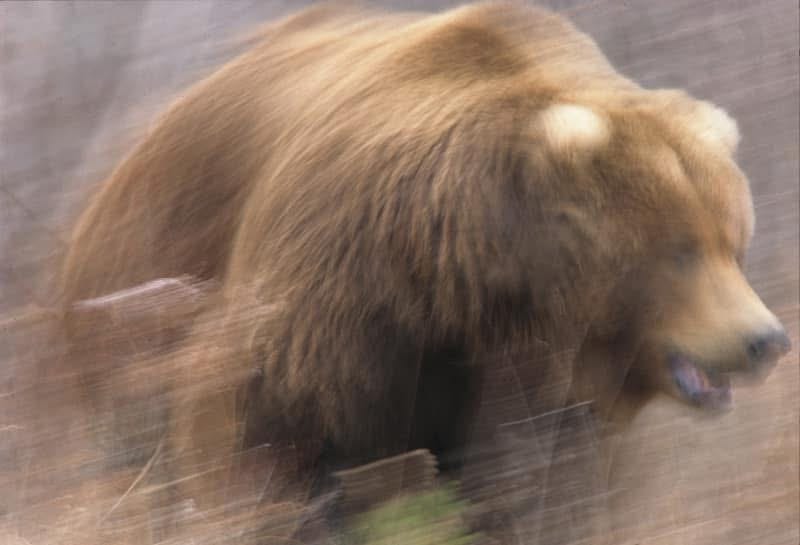
It was a cold, wet October day in 1987, a miserable mix of rain and snow. I was deep in the Scapegoat Wilderness in northwest Montana, off-trail, pushing through drenched Menziesii brush. I was 27 years old, recently out of a Marine Corps Force Recon unit, and not yet very wise about the ways of wild grizzlies—or how to respectfully behave in their home. I had experienced one exhilarating close encounter with a grizzly the year before, in the same area, and was already intrigued. But I was also cocky, overconfident, and naïve.
Head down and far less alert than I now know I should have been, lost in thoughts of warmer times and places, I was jolted out of my stupor by a loud crashing sound—as if the entire forest suddenly erupted. I looked up to see a grizzly, more brown blur than form, charging toward me at full speed.
It happened fast. There was no time to respond. But I remember this clearly: that nauseating, faint, dizzying sensation when your brain triggers the nervous system—when reason and judgment shut down and the adrenal glands flood your body with stress hormones like cortisol and adrenaline. I was frozen in place by fear.
Before I could even react, the bear skidded to a stop maybe ten yards away, snapped her teeth, hissed, spun around, and disappeared. Soon the forest was deafeningly silent. I dropped to my knees and threw up. Then, cautiously and humbly, I retreated the way I had come.
At the time, I thought I was simply lucky. Maybe I was. But — with many more years behind me, and a lot of time spent around grizzlies — here’s what I know now: bears rarely attack, even when provoked. This bear was almost certainly a female with cubs. Grizzly mothers are fiercely protective of their young. I don’t believe she was angry—I believe she was afraid, responding to what she perceived as a threat to herself and her offspring. Bears usually give ample warning: nervous pacing, raised hair, hissing, clacking teeth. A bluff charge is often the final, deadly serious message:
“WARNING! LEAVE ME ALONE. PLEASE. I CAN AND WILL KILL YOU.”
Who could blame her?
I got the message—loud and clear.
I’ve come to believe that bears often embody patience, understanding, grace, and even compassion. They’re honest—sometimes brutally so. From an evolutionary perspective, it makes no sense for a grizzly, or any wild animal, to waste energy or risk injury unnecessarily, especially when survival depends on strength and health. Like us, they want to feel safe and secure. They want to be left alone. They need—and deserve—space and respect.
True coexistence requires that we show them, at the very least, the same patience, understanding, and awareness they show us. When they become uncomfortable, we must humbly heed their warnings. That is respect. It’s the least we can do for a species we have ignorantly and arrogantly pushed to the brink of extinction. Today, grizzlies occupy less than two percent of their historic range in the lower 48 states. And in the few states where they still survive, efforts are underway to remove federal protections under the Endangered Species Act, hand “management” over to state wildlife agencies, and open hunting seasons. Just look at the nonscientific mismanagement and persecution of wolves to see how that will likely end for grizzlies. That isn’t coexistence—it’s war.
Since that day 37 years ago, I’ve been captivated by grizzlies. I’ve sought—and continue to seek—everything I can learn about their behavior, habits, and habitat. I spend as much time as possible in their home, moving with awareness, caution, humility, and respect for these remarkable fellow beings. And I do what I can to help ensure that the Great Bears remain part of what little we have left of an authentic, mysterious, and wonderful wild world.
It’s the stories that count. Thanks!
Wise, humane, beautiful, Dave. You are doing what you can to bring sanity to a world that has lost its connection to life.